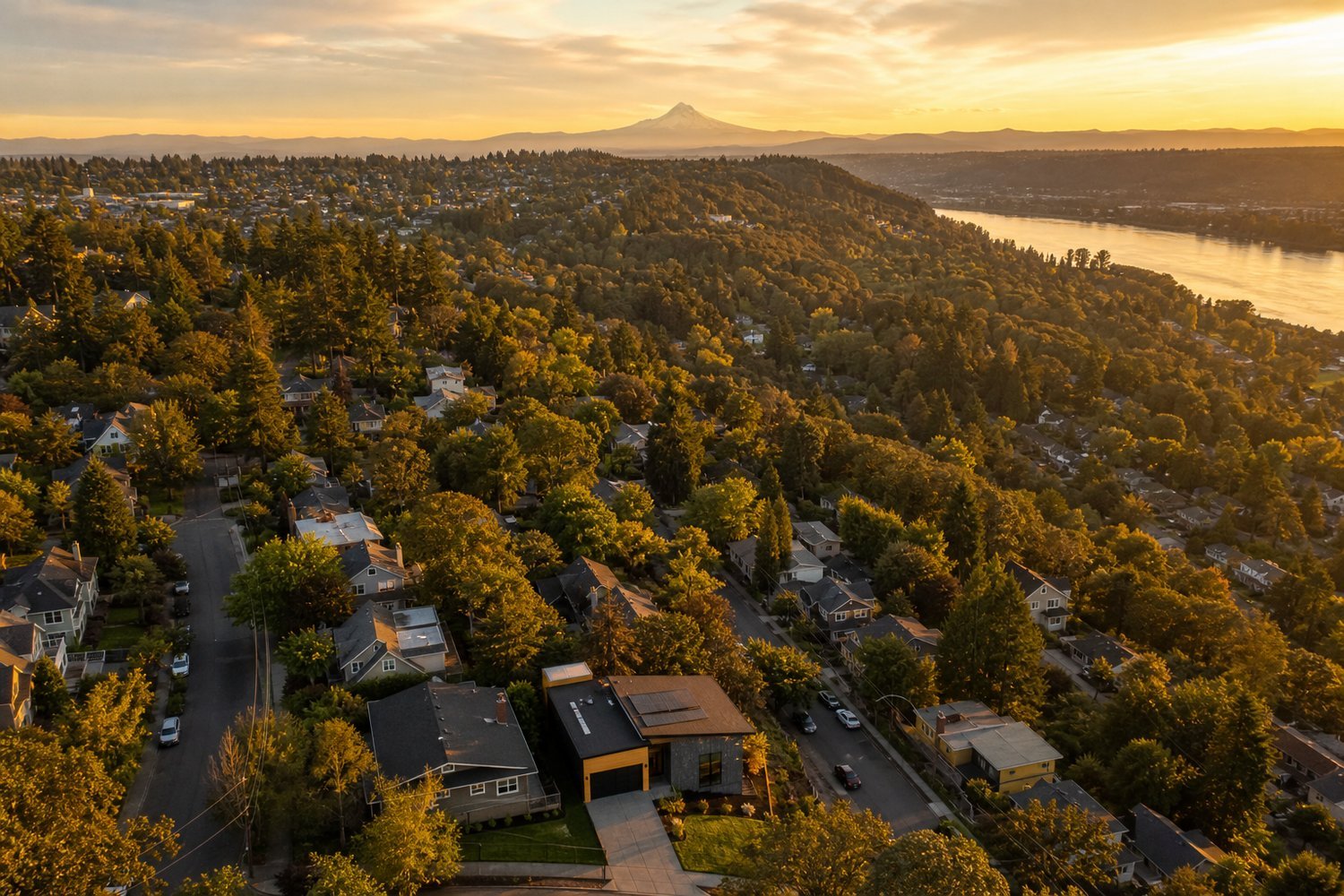

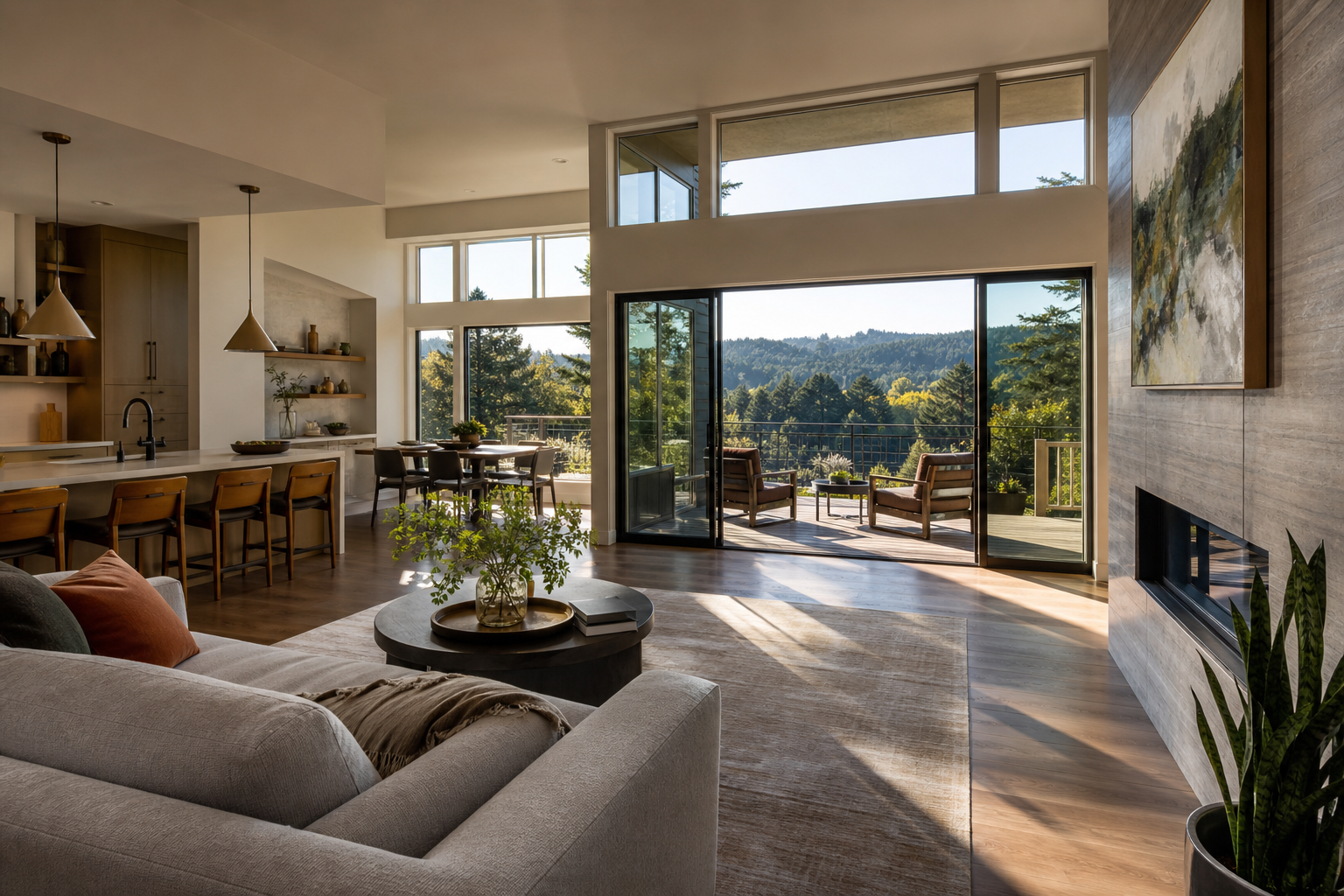
Bethany stands out in the Portland Metro as a master-planned, high-income suburb with newer construction, strong community amenities, and a median household income above $164K. Luxury-segment homes as of July 2026 were priced around $1.4M with approximately 4,400 sq ft, offering upscale suburban living with direct access to both downtown Portland and Silicon Forest employers.
What makes Bethany stand out for luxury living in the Portland Metro?
Bethany is a master-planned census-designated place in Washington County with a median household income above $164,000, newer construction throughout, and a luxury-segment median near $1.4M as of July 2026. It sits between downtown Portland and major Silicon Forest employers, giving high-earning professionals the upscale suburban environment they want without sacrificing commute access.
Key Takeaways
- As of July 2026, local brokerage data for Bethany’s luxury segment showed a median list/sale price around $1.4M with approximately 4,400 sq ft per home and roughly 56 days on market.
- The most recent 3-month trailing median sale price for all Bethany homes was approximately $742,000, according to Redfin’s Summer 2026 market summary, down about 7.8% year-over-year, reflecting a broader Portland Metro correction.
- According to 2019–2023 U.S. Census estimates, Bethany’s median household income is $164,315, the most recent official figure available as of September 4, 2026.
- Bethany’s owner-occupancy rate of 68.2% exceeds the Oregon statewide rate of 61.4%, signaling a stable, long-term homeowner community.
- Bethany’s premium tier, with homes often priced at $900K and above, can offer more square footage per dollar than comparable upscale pockets in NW Portland or the West Hills.
What does the Bethany luxury market actually look like in 2026?
Here’s the honest picture: Bethany operates as two markets inside one zip code.
At the broader level, Redfin’s Summer 2026 market summary puts the 3-month trailing median sale price for all Bethany homes at roughly $742,000, down about 7.8% from the same period a year prior. That reflects the wider Portland Metro softening, more inventory, longer timelines, buyers with more leverage than they’ve had in years.
But that blended number includes townhomes, smaller older properties, and entry-level product. When you isolate the luxury segment, think larger square footage, newer construction, HOA-managed communities, the picture shifts considerably.
As of July 2026, local brokerage data for Bethany and the broader NW Portland corridor showed the luxury segment running at a median around $1.4M, with homes averaging approximately 4,400 square feet and sitting on the market for roughly 56 days. That’s not a fast market, but it’s a deliberate one. Buyers at this price point take their time, and sellers who price correctly are still transacting.
In the three months through May 2026, a separate market analysis pointed to a trailing median closer to $766,000 with a price per square foot around $303. That analysis also flagged a premium tier where comparable homes in Bethany were listing $60,000 to $80,000 below what similar properties would fetch in some adjacent upscale pockets. That gap matters if you’re a buyer who cares about value per square foot, and most buyers at this level do.
For context on where Bethany sits relative to the broader Portland Metro luxury conversation, my Portland luxury real estate market guide for high-income professionals covers the strategic landscape in more depth.
| Market Segment | Approximate Median Price | Approx. Sq Ft | Days on Market | Data Period |
|---|---|---|---|---|
| All Bethany homes (trailing 3-month) | $742,000 | Varies | Not specified | Summer 2026 (Redfin) |
| Bethany overall trailing median | $766,000 | ~$303/sq ft | Not specified | 3 months through May 2026 |
| Luxury segment (Bethany / NW Portland) | ~$1,400,000 | ~4,400 sq ft | ~56 days | July 2026 (local brokerage data) |
Every situation is different, and these figures shift with inventory and interest rates. The only way to know exactly where a specific home or price point lands is to run a current analysis, that’s exactly what I do before any client makes a move in this market.
How Bethany compares to Forest Heights, Cedar Mill, and the West Hills
I work across Forest Heights, West Hills, and Bethany regularly, and the honest comparison comes down to what kind of luxury you’re after.
Forest Heights and the West Hills offer older, more custom hillside homes with closer proximity to central Portland. The architecture is often distinctive, the lots can be dramatic, and the addresses carry a certain prestige. But you’re also dealing with older infrastructure, steeper terrain, and in some cases longer timelines on renovations. If you want to explore that side of the equation, my West Hills lifestyle guide covers it in detail.
Cedar Mill and Oak Hills sit immediately adjacent to Bethany and offer a mix of mid-century homes and newer infill. The price points overlap, but the consistency of product is different. Bethany’s master-planned subdivisions give you more predictable build quality, cohesive neighborhood standards, and a higher share of homes built in the last 20 years.
Bethany’s pitch is newer construction, flatter lots, HOA-enforced standards, and direct access to both the Portland urban core and Silicon Forest employers. If your household earns at the level where Bethany’s income profile sits, and according to U.S. Census Bureau 2019–2023 estimates, the community’s median household income is $164,315, you’re likely weighing those tradeoffs carefully. I walk my clients through exactly this comparison before we ever look at a single listing.
What makes Bethany worth the price beyond the home itself?
The home is only part of what you’re buying in Bethany. The community infrastructure around it is what sustains long-term value.
Community design and green space
Bethany was built with connectivity in mind. Neighborhood parks, trail systems, and green corridors run through the planned subdivisions, and residents have access to larger destinations like Forest Park and the Tualatin Hills Park and Recreation District, one of the most extensive park systems in the Pacific Northwest. For buyers coming from other major metros, this level of integrated outdoor access within a suburban setting is genuinely rare.
The village-style commercial centers, Bethany Village, Bethany Creek, and the surrounding retail clusters, put grocery, fitness, dining, and professional services within a short drive or walk. It reads less like a strip-mall suburb and more like a self-contained community with real amenities.
The professional and demographic profile
According to 2020 Census data, Bethany’s population was 31,350, with 30% under age 18 and a median age of 36.9 years. More recent compiled estimates from Census Reporter put the population closer to 33,100 across 5.4 square miles. That density, combined with high owner-occupancy, AreaVibes housing data puts owner-occupied households at 68.2% versus 61.4% statewide, creates a neighborhood where people are invested in their community long-term.
Third-party demographic estimates from Point2 show average household income near $189,343, consistent with the Census range. These are compiled estimates, not official 2026 figures, but they reinforce the picture of a high-earning professional community. The households here can support strong HOA standards, upscale retail, and the kind of property maintenance that protects everyone’s investment.
Commute access, the practical luxury
One thing that gets undersold in luxury suburb conversations is commute quality. Bethany sits in a position that very few Portland Metro communities can match: reasonable access to downtown Portland to the east, and direct routes to Hillsboro, Beaverton, and the Silicon Forest employment corridor to the west. For households where one or both partners work at Nike, Intel, or the broader tech and professional services cluster in Washington County, Bethany eliminates the tradeoff between address and commute. That’s a real quality-of-life factor that shows up in sustained demand even when the broader market softens.
FAQ: Bethany luxury real estate questions buyers actually ask
Is Bethany considered one of Portland’s luxury suburbs, and how do home prices compare to the rest of the metro?
Yes, Bethany consistently sits in the upper tier of Portland Metro pricing. The most recent 3-month trailing median for all Bethany homes was approximately $742,000 as of Summer 2026, according to Redfin, and the luxury segment ran around $1.4M as of July 2026 local brokerage data. That places Bethany well above the broader Portland Metro median and in the same conversation as Forest Heights and the West Hills, though Bethany often offers more square footage per dollar than some adjacent upscale pockets.
What makes Bethany different from Cedar Mill or Forest Heights for upscale living?
Bethany’s defining advantage is its newer, more consistent housing stock within master-planned communities, compared to the older custom homes and mid-century mix you find in Cedar Mill and Forest Heights. Bethany also offers easier access to Washington County employment centers like Nike and Intel, flatter terrain, and cohesive HOA-managed neighborhoods, which translates to more predictable build quality and community standards for buyers who want a turnkey luxury experience.
What kinds of luxury homes are common in Bethany?
The luxury segment in Bethany is dominated by large-square-footage, HOA-regulated homes in planned subdivisions, newer construction with modern architecture, attached garages, and proximity to parks and trails. As of July 2026, luxury homes in the Bethany and NW Portland corridor were averaging approximately 4,400 square feet. Custom builds and gated communities exist but are less common than in some other Portland Metro luxury markets; the strength here is in the consistent quality of planned development rather than one-off custom estates.
How walkable is Bethany for everyday life?
Bethany is more walkable than many Portland Metro suburbs, particularly for everyday errands. Village-style commercial centers cluster grocery, dining, fitness, and services within reach of most neighborhoods, and the trail network connects residents to parks and green space without needing a car. That said, it’s still a suburban environment, most residents drive for major shopping and commuting, and walkability varies by exact location within Bethany.
How competitive is the Bethany luxury market right now, and what should buyers expect?
As of July 2026, the luxury segment in Bethany was running roughly 56 days on market, slower than peak years, which gives buyers more room to negotiate than they’ve had recently. The broader Bethany market showed a year-over-year price decline of about 7.8% in Summer 2026 per Redfin, reflecting the wider Portland Metro correction. Buyers should expect more inventory and more negotiating leverage than in prior years, but well-priced luxury homes are still transacting. Working with an agent who knows how to choose the best luxury real estate agent in Portland makes a real difference at this price point.
The bottom line on Bethany
Bethany earns its place at the top of the Portland Metro luxury conversation because the fundamentals are genuinely strong: high-income households, newer construction, master-planned community infrastructure, and commute access that most upscale suburbs can’t match. The current market gives buyers more room than they’ve had in years, and the gap between Bethany’s price per square foot and some adjacent luxury pockets is real.
If you’re weighing Bethany against other parts of the metro, I’d rather walk you through the specifics of your situation than hand you a generic list. Schedule a consultation and we’ll look at exactly what your budget gets you in Bethany versus the alternatives, with current data, not estimates.
About Pascha Cain
Pascha Cain is a Portland Metro Realtor, investor, and licensed contractor who brings 20+ years of brand and business experience from Nike and adidas to real estate. She helps clients make smarter decisions around buying, selling, renovating, and investing, combining sharp marketing, design vision, and a wealth-building mindset to protect and maximize the value of every home.
Pascha Cain, Real Broker | OR License #201251465
Equal Housing Opportunity. Pascha Cain is licensed in Oregon, License #201251465, regulated by the Oregon Real Estate Agency. This article is general information only and does not constitute legal, tax, or financial advice. Confirm your specific numbers with your closing agent, tax advisor, or lender.