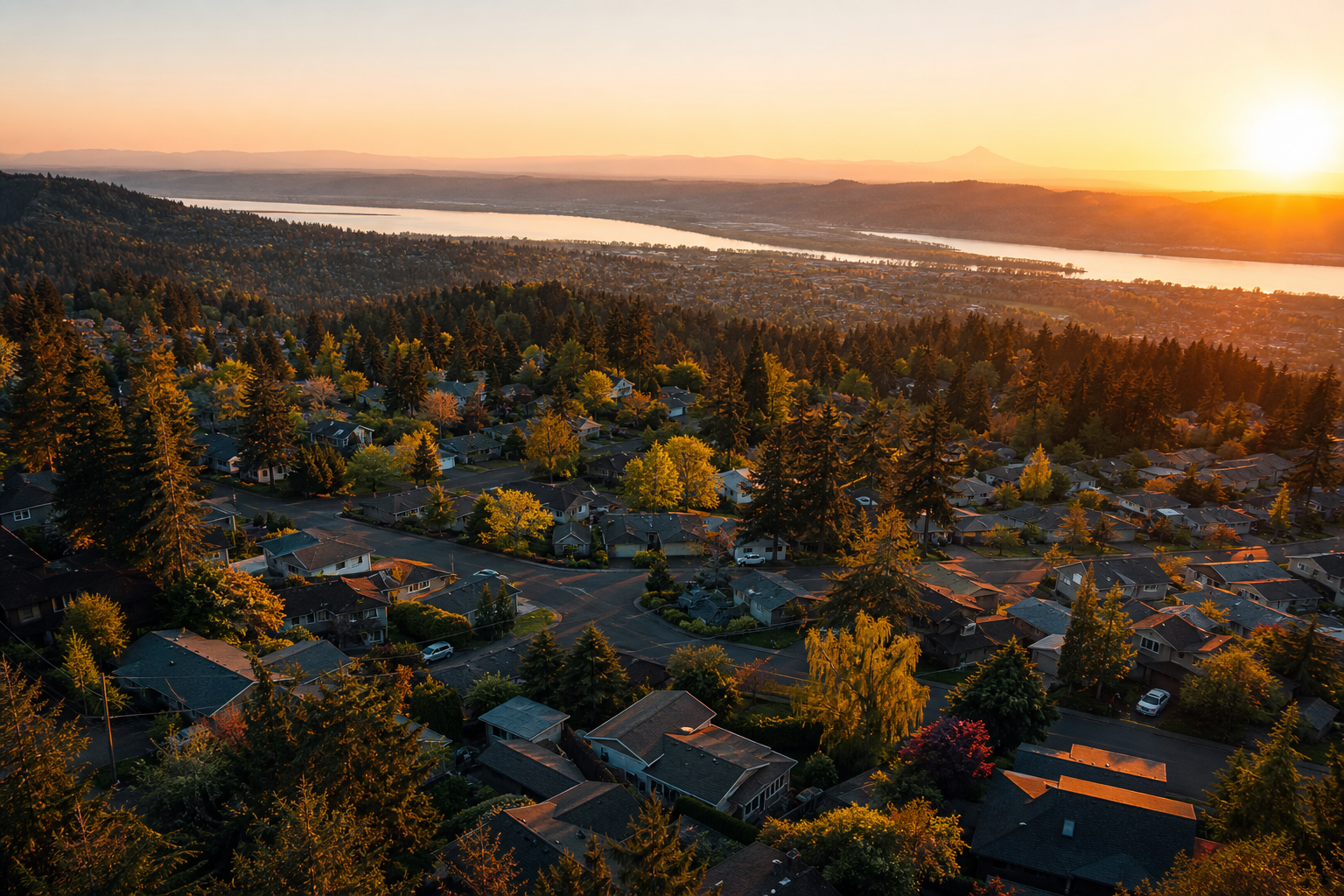

Beaverton, Oregon offers a genuine balance of urban access and suburban scale, nearly 100,000 residents, strong job proximity, a racially diverse community, and a housing market that has softened slightly into 2026, giving buyers more room to negotiate than in prior years.
What is it actually like to live in Beaverton, Oregon?
Beaverton sits at a sweet spot in the Portland Metro: big enough to sustain real urban amenities, small enough that it doesn’t feel like you’re fighting the city every day. With a 2024 estimated population of around 98,000 and a land area of just 19.6 square miles, it packs a lot into a manageable footprint, diverse neighborhoods, strong employment access, and a housing market that has shifted toward buyers heading into late 2026.
Key Takeaways
- According to the U.S. Census Bureau, Beaverton’s 2024 estimated population was 98,302, making it the fifth-largest city in the Portland Metro region.
- The most current mid-2026 data from Redfin shows Beaverton home prices down about 6% year-over-year for the three months ending July 2026, with a median sale price near $573,000, giving buyers more negotiating room than in prior years.
- Beaverton is one of the more racially and ethnically diverse communities in the Portland Metro, with about 19% Hispanic origin and 13% identifying as two or more races, per Greater Portland Inc.
- The city is projected to grow to approximately 118,000 residents by 2042, according to the City of Beaverton Community Profile, signaling continued investment in infrastructure and services.
- Rental costs vary across Beaverton’s ZIP codes, with median rents ranging from roughly $1,690 to $2,200 depending on the neighborhood, based on early-to-mid 2026 data from multiple aggregators.
Why does Beaverton attract so many Portland Metro relocators?
I work with buyers coming from all over, California, Texas, the Midwest, and inner Portland, and Beaverton comes up constantly as a landing spot. The reason isn’t one single thing. It’s the combination: you’re close to major employers, you have real transit options into Portland, the housing stock is more varied than people expect, and the community itself is genuinely diverse in a way that makes it feel less like a cookie-cutter suburb.
According to Greater Portland Inc, Beaverton functions as part of the core employment and innovation hub of the Portland Metro, not just a bedroom community. That distinction matters when you’re weighing where to put down roots.
Scale that actually works in your favor
At roughly 19.6 square miles and just under 100,000 residents, Beaverton has the density to support real retail, dining, and services without the congestion of a major urban core. The City of Beaverton’s own community profile projects growth to around 118,000 by 2042, steady enough to drive continued investment in infrastructure, but not the kind of rapid expansion that strains roads and services overnight.
That manageable scale is something I point out to every relocation client. You can get across town in 15 minutes on a normal day. That matters for quality of life in ways that don’t show up in a spreadsheet.
A genuinely diverse community
Beaverton is one of the more diverse cities in the Portland Metro. Regional economic data compiled by Greater Portland Inc show approximately 19% Hispanic origin, 13% identifying as two or more races, and 12.7% Asian, numbers that reflect decades of growth as a regional employment center. For buyers relocating from more diverse metro areas, this is often a deciding factor.
What does the Beaverton housing market look like right now?
Here’s where things get interesting for buyers in 2026. The market has softened meaningfully compared to the frenzy of 2022 and 2023, and the most recent data reflects that shift.
The most current snapshot I have comes from Redfin’s market summary for the three months ending July 2026: Beaverton home prices were down about 6% year-over-year, with a median sale price around $573,000 over that period. That’s a meaningful shift from the earlier 2025 figures, when aggregators like Realtor.com were reporting a citywide median closer to $544,900 with essentially flat year-over-year movement.
Earlier in 2025, Zillow’s data showed homes going pending in roughly 26 days, which is an active pace by national standards. The mid-2026 softening in prices doesn’t mean the market has stalled, it means buyers have more room to negotiate than they did two years ago.
It’s also worth knowing that Beaverton isn’t one uniform market. ZIP codes tell different stories. A May 2026 snapshot for ZIP 97078 shows a median home price near $494,000 with a year-over-year decline, while rental data from Realtor.com’s 97007 page and 97006 page (updated March 2026) show median rents ranging from about $1,690 to $1,748 depending on the neighborhood. The pockets closer to major corridors and employers tend to hold value differently than the quieter residential areas further out.
Your specific situation, what you’re buying, at what price point, and in which part of Beaverton, determines how all of this plays out. That’s exactly the kind of analysis I run for every buyer before we start touring homes.
| Data Point | Figure | Source / Period |
|---|---|---|
| Median sale price (citywide) | ~$573,000 | Redfin, 3 months ending July 2026 |
| Year-over-year price change | –6.0% | Redfin, mid-2026 |
| Median home price (ZIP 97078) | ~$494,000 | Prop-Metrics, May 2026 |
| Average days to pending (citywide) | ~26 days | Zillow, early 2025 |
| Median rent (ZIP 97007) | ~$1,748/mo | Realtor.com, March 2026 |
| Median rent (ZIP 97006) | ~$1,690/mo | Realtor.com, March 2026 |
Note: figures above are drawn from third-party aggregators providing market color. They are not official MLS data. Treat them as directional context, not a substitute for a current comparative market analysis.
If you’re comparing Beaverton to other parts of the Portland Metro, I’d also recommend reading my West Hills relocation guide and the NW Portland relocation guide, they give you a fuller picture of the tradeoffs across different Portland Metro communities.
What does day-to-day life in Beaverton actually look like?
Beaverton’s lifestyle pitch isn’t abstract. Here’s what I tell relocation clients when they ask me to put it plainly:
You get MAX Light Rail connections into downtown Portland, which means you don’t have to drive every time you want to access the city. You get a walkable town center with real restaurant and retail density. You get proximity to major tech and corporate employers along the US-26 corridor without living in an office park. And you get neighborhoods that feel residential, actual yards, quieter streets, space to breathe, without being an hour from everything.
According to the U.S. Census Bureau, Beaverton is the seventh-most-populous city in Oregon and fifth in the Portland Metro. That ranking tells you something useful: it’s a real city with real services, but it’s not Portland. You’re not signing up for the congestion, the parking costs, or the urban density tradeoffs that come with living inside city limits.
For buyers coming from larger metros, Beaverton often surprises them. The combination of genuine diversity, strong employment access, and a housing market that has softened into 2026 makes it one of the more compelling entry points into the Portland Metro right now. Whether that’s the right fit for your specific situation depends on a lot of factors, and that’s a conversation worth having before you start making offers.
Frequently Asked Questions
Is Beaverton more affordable than living directly in Portland?
In mid-2026, Beaverton’s median sale price is running around $573,000 based on Redfin’s most recent data, while prices in many inner Portland neighborhoods remain higher on a per-square-foot basis. Beaverton also offers more varied price points across its ZIP codes, with some areas like 97078 showing median prices closer to $494,000 as of May 2026. The gap isn’t dramatic, but you tend to get more square footage and more parking for your money in Beaverton than in comparable inner Portland locations.
Are Beaverton home prices and rents rising or softening in 2026?
Prices have softened. Redfin’s mid-2026 data shows citywide home prices down about 6% year-over-year, which is a meaningful shift from the flat-to-slightly-positive movement seen in 2025 data. Rents are a different story, a May 2026 snapshot for ZIP 97078 shows median rent near $2,200, with year-over-year rent growth in the high single digits for common unit sizes, suggesting the rental market has held firmer than the purchase market.
How competitive is the Beaverton housing market for out-of-state buyers?
Earlier 2025 data showed homes going pending in roughly 26 days, which is an active pace, but the mid-2026 price softening suggests buyers have more negotiating room than in prior years. Out-of-state buyers should still come prepared, pre-approval in hand, clear on their target ZIPs, and working with someone who knows the local inventory. The market isn’t slow, but it’s no longer a situation where you have to waive everything to compete. I walk out-of-state relocation clients through this process regularly, and the preparation steps matter.
How does Beaverton compare to other Portland suburbs like Hillsboro or Tigard in size and diversity?
Beaverton’s 2024 estimated population of 98,302 makes it the fifth-largest city in the Portland Metro, per the U.S. Census Bureau. In terms of racial and ethnic diversity, Greater Portland Inc data show about 19% Hispanic origin and 13% two or more races, making it one of the more diverse communities in the region. Hillsboro sits just to the west and shares a similar employment-corridor character; Tigard is smaller and slightly more suburban in feel. Each has a distinct market dynamic, and the right choice depends on your commute, price point, and what kind of neighborhood environment you’re after.
Does Beaverton have enough urban amenities without giving up a quieter suburban feel?
Yes, and that balance is genuinely Beaverton’s strongest selling point. The city has a walkable town center, MAX Light Rail access to downtown Portland, and strong retail and dining density, all within a 19.6-square-mile footprint that keeps things manageable. The City of Beaverton’s community profile describes it as part of the Portland Metro urbanized area while maintaining its own distinct municipal identity, which is exactly how residents tend to describe it too. You’re connected to the city without being consumed by it.
Beaverton’s combination of scale, diversity, employment access, and a housing market that has shifted in buyers’ favor heading into late 2026 makes it one of the most compelling relocation targets in the Portland Metro. If you’re weighing whether it’s the right fit for your situation, the best next step is a conversation, not another hour of scrolling portal data.
Schedule a free consultation with me here and we’ll map out what Beaverton, or any other part of the Portland Metro, actually looks like for your budget, timeline, and priorities.
About Pascha Cain
Pascha Cain is a Portland Metro Realtor, investor, and licensed contractor who brings 20+ years of brand and business experience from Nike and adidas to real estate. She helps clients make smarter decisions around buying, selling, renovating, and investing, combining sharp marketing, design vision, and a wealth-building mindset to protect and maximize the value of every home.
Pascha Cain, Real Broker | OR License #201251465
Equal Housing Opportunity. Pascha Cain, Real Broker, OR License #201251465, regulated by the Oregon Real Estate Agency. This article is general information only and is not legal, tax, or financial advice. Verify your own numbers with your closing agent, tax advisor, or lender.