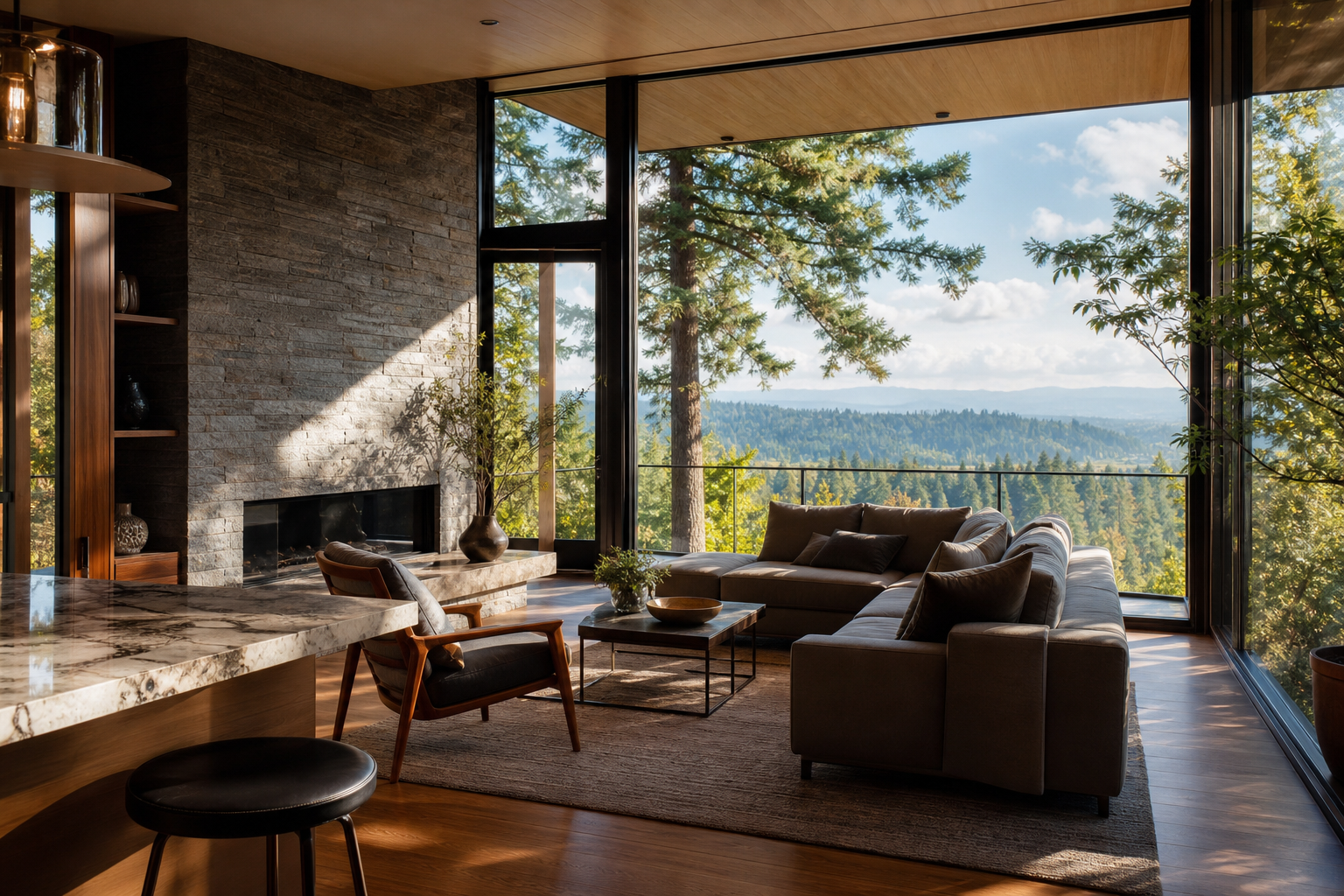

When Portland buyers have more inventory to compare, staging shifts from optional polish to a competitive necessity. Prioritize cleaning, decluttering, layout, and lighting first, then add targeted furniture rental only where those lower-cost steps can’t solve the presentation problem.
How do you stage a Portland home when buyers have more choices?
When buyers have more inventory to compare, presentation is no longer a nice-to-have. A staged Portland home photographs better, shows better, and gives buyers fewer reasons to move on to the next listing. The most effective approach isn’t to spend the most, it’s to sequence your effort correctly: cleaning and decluttering first, layout and lighting next, and targeted furniture rental only where those steps can’t finish the job.
Key Takeaways
- According to the NAR 2025 Profile of Home Staging, 83% of buyers’ agents said staging made it easier for buyers to visualize a property as their future home.
- The living room, primary bedroom, and kitchen are the highest-priority rooms to stage, they establish scale, function, and the home’s first visual impression.
- Occupied homes rarely need full furniture rental; editing what’s already there, removing excess, and adding a few targeted pieces often produces the same result at a fraction of the cost.
- Vacant homes need scale cues, empty rooms read smaller and more ambiguous in photos, but full-home furnishing isn’t automatically necessary.
- Before accepting any staging proposal, get an itemized breakdown by room, rental duration, delivery, removal, and extension terms, a package price without those details is impossible to evaluate.
Staging a Portland home when buyers have more options to scroll through isn’t about decorating, it’s about removing every reason a buyer has to click away. If you’ve been tracking why Portland homes are taking longer to sell in 2026, you already know the stakes. More inventory means buyers can afford to be selective, and a home that doesn’t photograph well or feel move-in ready gets filtered out early.
Here’s how I walk my clients through it.
What should you do first to stage a Portland home when buyers are comparing more listings?
Start with the work that costs the least and delivers the most. Before any furniture gets moved or rented, the home needs to be clean, edited, and legible. These aren’t optional decorative upgrades, the NAR 2025 Profile of Home Staging identifies decluttering, whole-home cleaning, and curb appeal as among the most common recommendations real estate professionals make to sellers, and for good reason.
Cleaning and decluttering
A thorough clean, including windows, baseboards, grout, and appliances, does more for perceived value than most sellers expect. Buyers notice everything in person, and listing photos amplify every surface. After cleaning, remove anything that doesn’t need to be there: excess furniture, personal collections, bulky storage, visible pet equipment, and countertop clutter. The goal isn’t to make the home look unlived-in; it’s to make it look considered.
Depersonalizing without going blank
Remove family photographs, highly specific collections, political or religious displays, and visual clutter. That said, don’t strip the home down to nothing. A restrained amount of art and décor communicates proportion and livability, rooms that are completely bare can feel cold and hard to read in photos. The line I use with my clients: keep what communicates the room’s scale and purpose, remove what communicates your personal story.
Exterior presentation before interior decoration
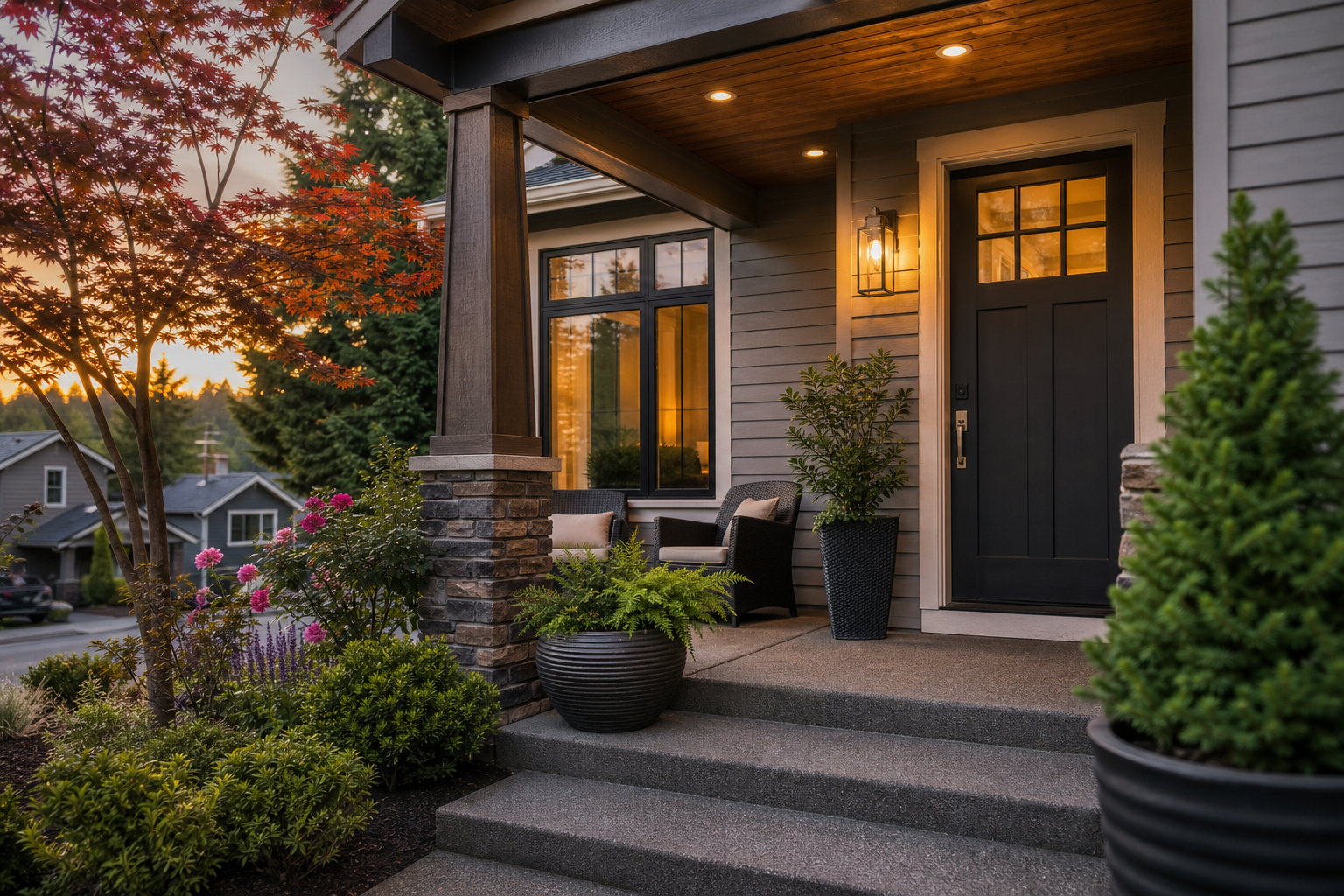
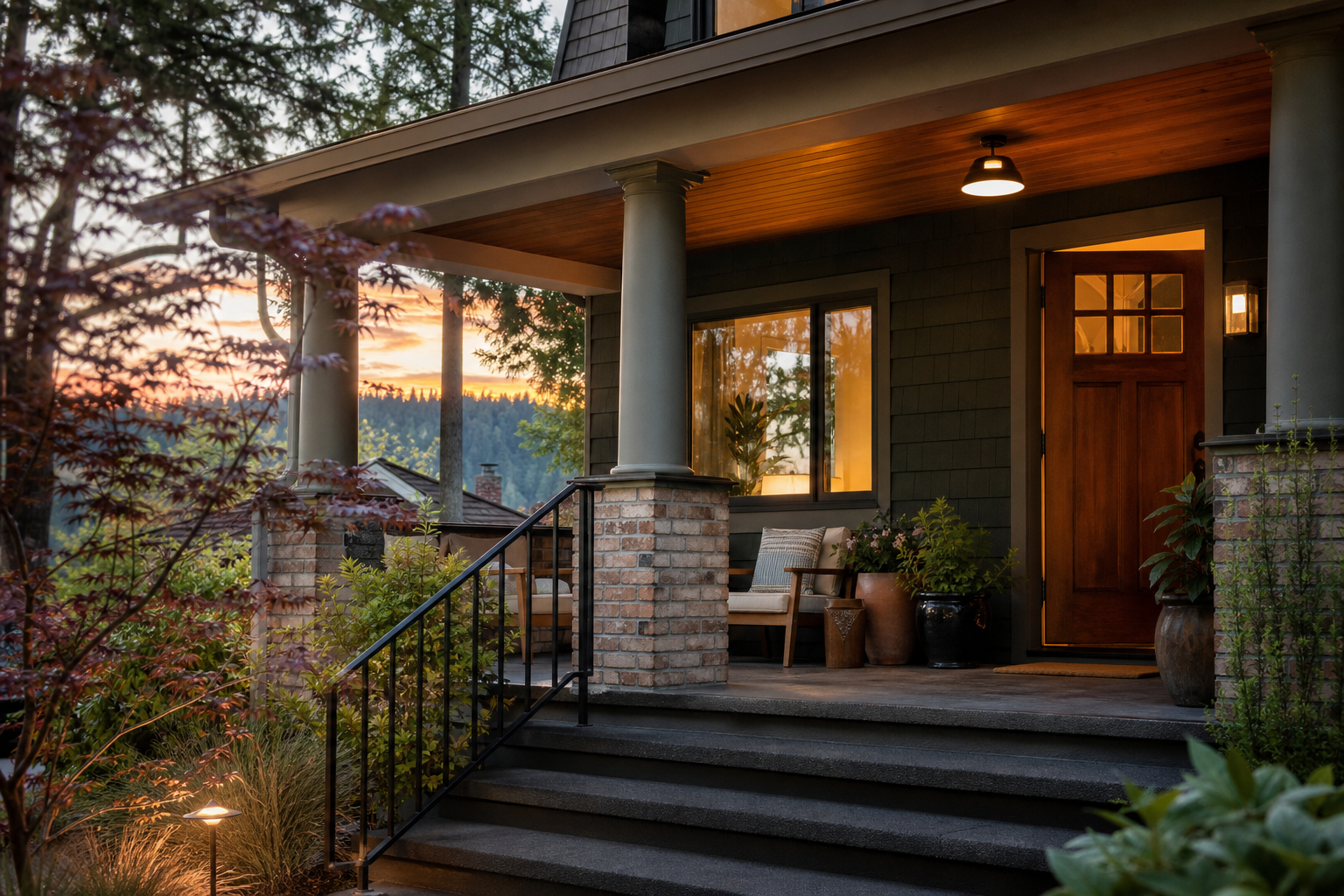
In Portland’s climate, the exterior takes a beating. Before any interior work, clear the front walk, trim visibly overgrown planting, sweep hard surfaces, clean the entry door, and replace worn hardware or house numbers if needed. Keep porch areas simple. When you schedule photography, time it for after surfaces have dried and leaves or weather debris have been cleared. First impressions in online listings start with the exterior photo, if that image doesn’t hold up, fewer buyers will click through to the interior.
Layout and lighting
Keep pathways visibly open and avoid blocking windows or doors. In smaller Portland houses and older neighborhoods, editing oversized furniture often produces more benefit than adding décor, a room that feels cramped in person reads even smaller in photos. Furniture should show how a room functions, especially in unusually shaped spaces common in older West Hills and NW Portland homes.
Lighting is a layered problem. Clean windows first, they make an immediate difference in natural light. Replace mismatched or burned-out bulbs and use consistent color temperature throughout the home where possible. Open window coverings before photos and showings. Add lamps in rooms with limited overhead lighting. The goal isn’t maximum brightness; it’s even illumination and clear room boundaries in photographs. According to the NAR Profile of Home Buyers and Sellers, buyers rate listing photographs as highly useful when evaluating homes, and a dark, uneven room is one of the fastest ways to lose a buyer before they ever schedule a showing.
How should you decide between occupied and vacant staging?
This is where I see sellers spend money they didn’t need to spend, or skip investment they really should have made. Occupied and vacant homes have different presentation problems, and the right staging approach depends on which one you’re solving. For a deeper look at how this plays out specifically in West Portland, see What West Portland Sellers Should Know About Home Staging.
Occupied home staging: edit first, rent selectively
Most occupied homes don’t need a full furniture rental package. The practical sequence that works for my clients is: consultation and room-by-room editing, removal of excess furniture and storage, repositioning to create clear walking paths, and then targeted rental of only the pieces that are genuinely missing or that photograph poorly. That might be a bed frame, a dining set, a lamp, or entry furniture, not the entire house.
The strongest candidates for rental in an occupied home are rooms that are empty, awkwardly furnished, too large to read clearly, or missing a recognizable function. A single well-chosen rental piece can solve a presentation problem that no amount of rearranging would fix. But if cleaning, editing, and rearranging can get you there, start there.
Vacant home staging: prioritize scale cues, not full-home furnishing
Empty rooms look smaller and more ambiguous in photographs and showings than most sellers expect. As local staging providers note, vacant homes generally require furniture and accessories to establish scale, circulation, and room purpose, but full-home furnishing is not automatically necessary. Prioritize the main living area, dining area, primary bedroom, and entry or flex space. Secondary bedrooms can often remain lightly furnished if they have an obvious purpose and adequate circulation.
One thing I always flag with clients: rental terms matter as much as the initial cost. If the listing takes longer than expected, extension charges add up. Before signing any staging contract, confirm the rental term, extension pricing, delivery and removal logistics, damage responsibility, and exactly which rooms and décor items are included. A lower advertised price that doesn’t include delivery, removal, or extensions can end up costing more than a higher package that does.
A cost-versus-benefit framework for either situation
For every proposed staging expense, occupied or vacant, I run it through the same questions:
- Does it improve online photographs?
- Does it clarify room function or scale?
- Does it correct a distracting condition buyers will notice in person?
- Could the same result be achieved through cleaning, removal, rearrangement, or furniture you already own?
- Is this item needed for the entire listing period, or only for photography and initial showings?
Pricing a Portland home when buyers are actively comparing multiple listings means every dollar you put into presentation needs to earn its place. If the answer to that last question is “only for photos,” some staging companies offer photography-only or short-term options worth exploring. Your specific situation, the home’s condition, price point, and how competitive your segment is right now, determines where the investment makes sense. That’s a conversation worth having before you commit to a scope.
| Staging Priority | Occupied Home | Vacant Home |
|---|---|---|
| Deep cleaning and decluttering | Always first | Always first |
| Depersonalizing | Essential | N/A |
| Furniture editing and rearranging | High value, low cost | N/A |
| Targeted furniture rental | Selective, empty or problem rooms only | Priority, main living areas and primary bedroom |
| Lighting and window treatment | High value, low cost | High value, low cost |
| Exterior presentation | Before any interior work | Before any interior work |
| Rental contract review | If renting any pieces | Critical, confirm term, extensions, removal |
Frequently Asked Questions
Should I stage my Portland home if I’m still living in it?
Yes, and occupied staging is often more cost-effective than sellers expect. Start with cleaning, decluttering, and rearranging what you already own, then add targeted rental pieces only where those steps can’t solve the presentation problem. Most occupied homes don’t need a full furniture package; they need editing and a few strategic additions.
Is vacant staging worth the cost in Portland?
For most vacant homes, furnishing the highest-visibility rooms, the main living area, primary bedroom, and entry, is worth the investment because empty rooms read smaller and more ambiguous in photos and showings. Full-home staging isn’t always necessary, but leaving key rooms completely bare tends to hurt more than it saves. Confirm the rental term and extension charges before committing, since a longer marketing period can significantly change the total cost.
Which rooms should I stage first if my budget is limited?
The living room, primary bedroom, and kitchen are the highest-priority rooms according to the NAR 2025 Profile of Home Staging, and that holds true in Portland. Add the entry, it sets the tone for every showing, and address secondary bedrooms only if they’re empty or clearly missing a recognizable function.
What should I remove from my house before listing it?
Remove family photographs, personal collections, political or religious displays, excess furniture, visible storage (especially in closets and garages buyers will open), countertop clutter, and pet equipment. The goal is to help buyers picture themselves in the space, anything that reads as specifically yours makes that harder. When in doubt, remove it; you can always bring it back.
How should I stage a dark Portland home for listing photos?
Clean the windows first, it’s the single highest-impact step for a dark room. Replace mismatched or burned-out bulbs, use consistent warm-white color temperature throughout, open all window coverings, and add floor or table lamps in rooms with limited overhead lighting. Schedule photos during the brightest part of the day for your home’s orientation, and let your photographer know which rooms need extra attention.
Does staging help a home sell faster in the Portland market?
When buyers have more choices, a well-presented home stands out in online search, and most buyer decisions start there. The NAR’s research shows that 83% of buyers’ agents report staging made it easier for buyers to visualize a property as their future home, which directly affects how seriously they pursue it. In a market where homes are sitting longer, staging that improves photography and in-person impression reduces the time your listing spends competing against newer inventory.
Every situation is different, and the only way to know exactly where to invest for your specific home is to walk through it with someone who knows this market. Schedule a consultation and I’ll give you a room-by-room read on where your staging dollars will do the most work.
About Pascha Cain
Pascha Cain is a Portland Metro Realtor, investor, and licensed contractor who brings 20+ years of brand and business experience from Nike and adidas to real estate. She helps clients make smarter decisions around buying, selling, renovating, and investing, combining sharp marketing, design vision, and a wealth-building mindset to protect and maximize the value of every home.
Pascha Cain, Real Broker | OR License #201251465
Equal Housing Opportunity. Pascha Cain, Real Broker, OR License #201251465, regulated by the Oregon Real Estate Agency. This article is general information only and is not legal, tax, or financial advice. Confirm your specific numbers and costs with your closing agent, tax advisor, or lender.