

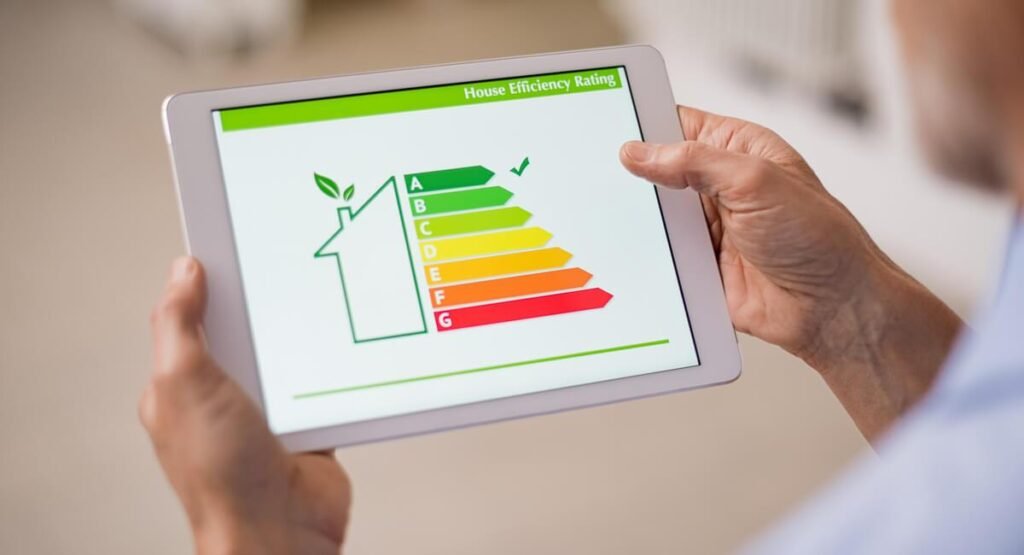
Does Portland require a Home Energy Score to sell your house?
Yes. Under Portland City Code Chapter 17.108, sellers of most single-family homes within Portland’s official city boundary are required to obtain a Home Energy Score and disclose it before publicly listing the home for sale. This applies to RMLS listings, Zillow, Redfin, yard signs, and any other public advertising. The score is produced by a certified assessor on a 1–10 scale. Failing to comply before listing can result in a $500 fine from the City of Portland.
Most Portland sellers don’t find out about the Home Energy Score until they’re sitting across from a potential buyer — or until their agent mentions it as an afterthought right before going to market.
That’s too late.
Since January 1, 2018, Portland has required sellers of most single-family homes to obtain and disclose a Home Energy Score before publicly listing their home. Not after. Not during escrow. Before you put it on the RMLS, before you put a yard sign in the ground, before you post it on Zillow.
If you skip it, the City of Portland can fine you $500. And more practically, it can derail a listing launch you’ve spent weeks preparing for.
Here’s what it is, who it applies to, exactly what you’re required to do, and how to make sure this doesn’t slow you down.
WHAT IS THE PORTLAND HOME ENERGY SCORE?
The Home Energy Score is Portland’s mandatory residential energy disclosure policy — think of it as an MPG rating for your house.
A certified assessor visits your home and evaluates how energy-efficient it is based on three things: the building’s shell (insulation, windows, air sealing), your heating and cooling systems, and your water heating. They generate a score from 1 to 10. A 10 means the home is highly efficient. A 1 means it’s using a lot of energy relative to its size and systems.
The goal isn’t to force you to make upgrades before selling. It’s disclosure — buyers have a right to understand the energy performance of the home they’re considering. The assessor also produces a report that includes recommended improvements, which buyers may reference when evaluating long-term operating costs.
What most sellers miss: the requirement to get this done sits entirely on your shoulders, and it has to happen before you advertise the home publicly in any form.
EXACTLY WHO IS REQUIRED TO COMPLY
This requirement applies specifically to sellers of most single-family homes within the City of Portland’s jurisdictional boundary.
It does NOT apply to:
- Mobile homes, manufactured homes, or floating homes
- Detached ADUs — as long as the main home on the lot is scored
- Homes sold completely privately, meaning never publicly advertised in any format
It DOES apply to:
- Townhome-style condos and side-by-side attached homes that can be individually assessed
- Any home publicly listed on the RMLS, Zillow, Redfin, Realtor.com, or similar platforms
- Homes advertised with yard signs, print ads, social media posts, or email campaigns
The most important thing to verify: your Portland mailing address does not automatically mean you’re within Portland’s jurisdictional boundary. Many homes in the greater metro — in areas like Beaverton, Cedar Mill, or parts of Northwest Heights — have Portland mailing addresses but fall under Washington County or another jurisdiction’s authority. Those sellers are not subject to the Home Energy Score requirement.
To verify, go to portlandmaps.com, enter your address, and look for the “Jurisdiction” field. If it says “Portland,” the requirement applies to you.
WHAT SELLERS ARE ACTUALLY REQUIRED TO DO
If your home falls within Portland’s jurisdiction and you’re planning to list publicly, here’s the full compliance checklist:
- Hire a certified Home Energy Score assessor. Portland maintains a list of approved assessors at portland.gov/pdxhes. The assessment typically takes one to two hours on-site. Costs generally run between $150 and $200, though this varies by assessor.
- Receive your score and Performance Report. Your assessor submits the results to the DOE’s official registry. You receive a 1–10 score and a full Home Energy Performance Report that includes recommended improvements.
- Include the score and report link in your RMLS listing. This is a required field on the listing form — your listing agent handles the technical entry, but the report needs to be in hand before the listing goes live. You can’t add it after the listing is active.
- Place printed copies of the report inside the home during showings. The City requires the report to be in an accessible, visible location — typically on the kitchen counter or dining table — whenever prospective buyers are touring the home.
- Provide the report to buyers who request it. If a buyer or their agent asks for a copy during or after a showing, you’re required to provide it.
This is exactly the kind of pre-listing step that gets overlooked in the rush to go to market. The best assessors in Portland are often booked two to three weeks out during spring listing season — so if you’re planning a spring launch, scheduling this now isn’t early, it’s smart.
OW LONG DOES A HOME ENERGY SCORE LAST?
The score itself is valid for up to eight years from the date of the original assessment, as long as no significant changes have been made to the home’s energy systems — think new roof, new HVAC, new insulation, or window replacements. If you’ve made major upgrades, a fresh assessment will reflect those improvements and could meaningfully change your score.
The printed and electronic report, however, expires every two years. That’s because the report includes current utility rates and carbon emission factors, which the City updates annually. So even if your score is still within its eight-year window, you’ll need to download a fresh report from the DOE registry every two years to have a current document for your listing.
If you purchased your home within the last few years and a score was disclosed to you at closing, check your transaction documents — you may already have what you need, or be close to it.
WHAT HAPPENS IF YOU SKIP IT
The City’s initial response to a non-compliant listing is a warning notice, giving you a 90-day window to correct the issue. If you don’t comply within that window, the fine is $500.
But the practical problem runs deeper than the fine. If your listing goes live without the score and a savvy buyer’s agent notices — or if it surfaces during the transaction — it creates a cloud over the deal at exactly the moment when you want everything clean and in order. The Energy Score requirement is part of Portland City Code. It’s the kind of thing that can prompt a buyer to ask what else might be missing from your disclosures.
Getting it done before you list is a non-issue. Discovering you need it after you’ve already launched costs you time, attention, and sometimes momentum at your most critical window — the first 21 days on market, when buyer traffic is highest.
A NOTE ON HOMES THAT SCORE LOW
If your assessor comes back with a 3 or a 4, you don’t have to do anything about it. The policy is disclosure, not correction. Buyers see the score and can factor it into their thinking — but you’re not required to upgrade your insulation, replace your windows, or install a heat pump before selling.
What a low score does affect is the conversation with buyers who are weighing ongoing utility costs. In Portland’s $750K–$3M range, a sophisticated buyer may ask about energy performance as part of their overall evaluation. Having the score in hand — along with the improvement recommendations in the report — lets you have that conversation on your terms rather than reacting to it during negotiations.
If you’re working with me, we’ll talk through how to position the score as part of your broader pre-listing strategy: whether it’s context for pricing, an upgrade worth making, or simply something to get ahead of before buyers start asking. That’s the difference between knowing the process and letting the process surprise you.
For more on what buyers in Portland’s current market are evaluating and how home condition directly affects your final sale price, see: https://pascharealty.com/maximizing-staging-roi-in-portlands-2026-balanced-market-strategies-for-high-net-worth-sellers/
And if you’re weighing whether now is even the right time to list, see: https://pascharealty.com/breaking-free-from-portlands-lock-in-effect-strategies-for-high-net-worth-homeowners-in-a-stabilizing-2026-market/
FREQUENTLY ASKED QUESTIONS
Do I need a Home Energy Score if I’m selling my Portland home for sale by owner?
Yes. The requirement applies to sellers — not just listings represented by agents. If you advertise your home publicly in any format (yard sign, Zillow FSBO listing, Craigslist, social media post), you need a Home Energy Score and Performance Report before that advertising goes live. The only exemption is a fully private sale with absolutely no public advertising of any kind.
What does a Portland Home Energy Score assessment cost, and who do I hire?
Most Portland Home Energy Score assessments run between $150 and $200. You must use a certified assessor from Portland’s approved list, which you can find through the City’s program at portland.gov/pdxhes. During peak spring listing season, the best assessors book out 3–4 weeks in advance — scheduling early is the only way to avoid a delay to your launch date.
What if my home is in Beaverton or Lake Oswego with a Portland mailing address — do I still need a score?
Only homes within Portland’s official jurisdictional boundary are subject to the requirement, and many homes with Portland mailing addresses fall outside that boundary. To verify, enter your address at portlandmaps.com and check the “Jurisdiction” field. Beaverton, Lake Oswego, West Linn, and other municipalities have their own jurisdictions and are not subject to Portland’s Home Energy Score policy.
Can I reuse a Home Energy Score from when I purchased the home?
Yes, if the original assessment was done within the past eight years and no major changes have been made to the home’s energy systems, the score is still valid. However, the accompanying Performance Report expires every two years. Even if your score is within its eight-year window, you’ll need to download a current report from the DOE registry to include in your RMLS listing — the old printed copy alone won’t satisfy the requirement.
What if my home scores a 2 or 3 on the energy scale — will that hurt my sale?
The score is a disclosure requirement, not a reason to delay or derail a sale. You’re not required to make any improvements before listing, regardless of your score. In Portland’s market, a well-priced, well-presented home with a low energy score will always outperform an overpriced home with a high score. Pricing and preparation drive outcomes — the energy score is one data point among many.
The Portland Home Energy Score is one of those pre-listing requirements that experienced sellers tend to wish they’d known about earlier. It’s not complicated — but it has a timeline, it involves scheduling someone, and it has to happen before your listing goes live.
If you’re planning to sell your Portland home, I walk every client through the full pre-listing process before we go to market — compliance requirements, preparation priorities, and pricing strategy — so there are no surprises at the worst possible moment.
Thinking of Buying or Selling? Schedule a Free Consultation: https://pascharealty.com/contact/
About Pascha Cain, Real Estate Broker
Pascha Cain is a Portland Metro Real Estate Broker, Investor, and Licensed General Contractor and a former Nike/Adidas global executive. She works with visionary sellers and buyers who know that strategy and marketing win in real estate. Connect with Pascha at pascha@pascharealty.com